Templates for contractors and remodelers
A small contracting business runs on five pieces of paper: the estimate, the proposal the client signs, the change order when scope moves, the job cost record that tells you whether you made money, and the invoice. Most contractors keep these in five different places, which is why margins leak.
The templates below are built to hand off to each other. The estimate prices every line from your real overhead and profit, the proposal and change order pull from it, the job cost tracker compares the budget to what you actually spend, and the invoice tracker makes sure the money arrives.
Templates
 Excel & Google Sheets
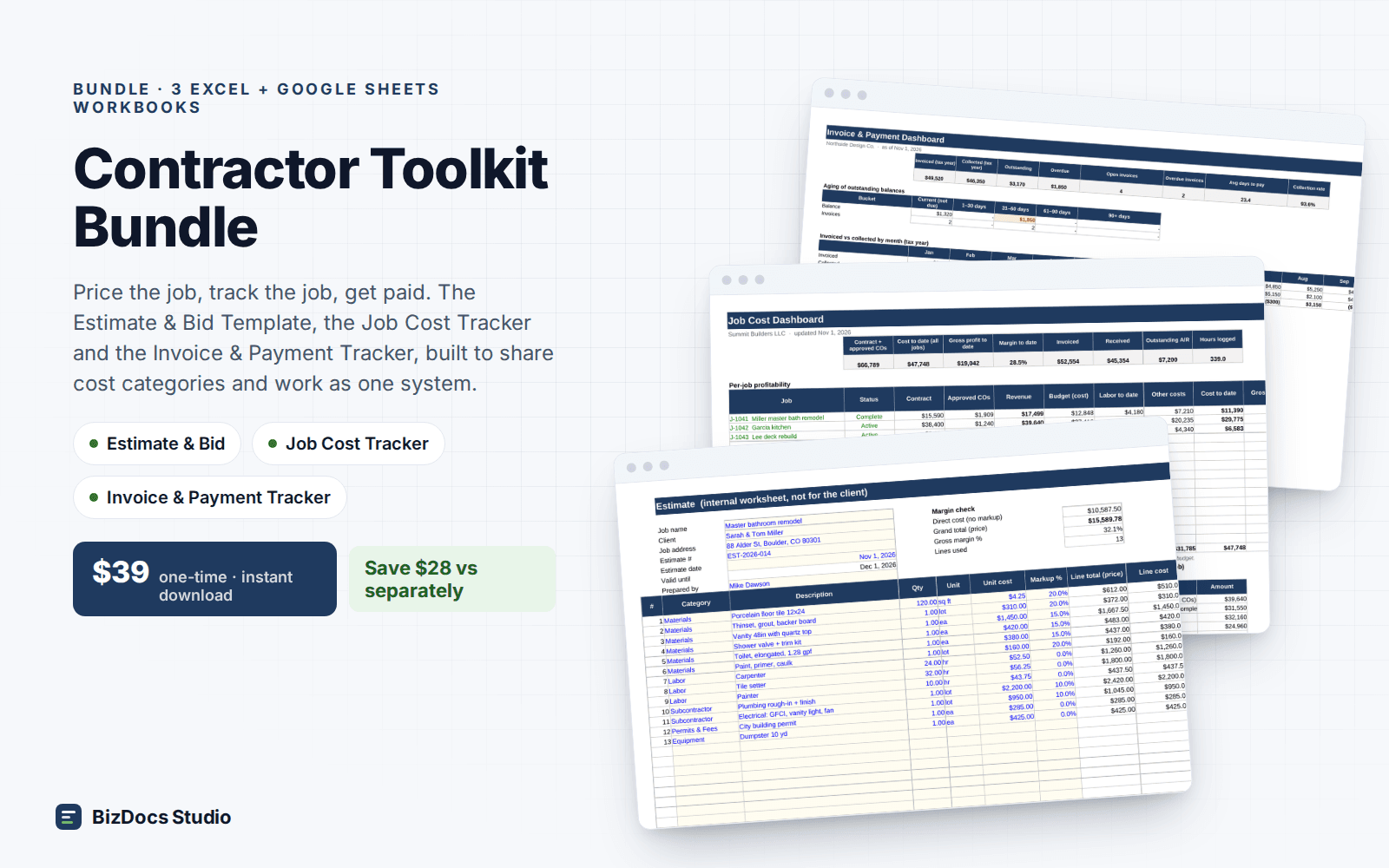
Contractor Toolkit Bundle
Price the job, track the job, get paid. Three workbooks built to work as one.
 Excel & Google Sheets
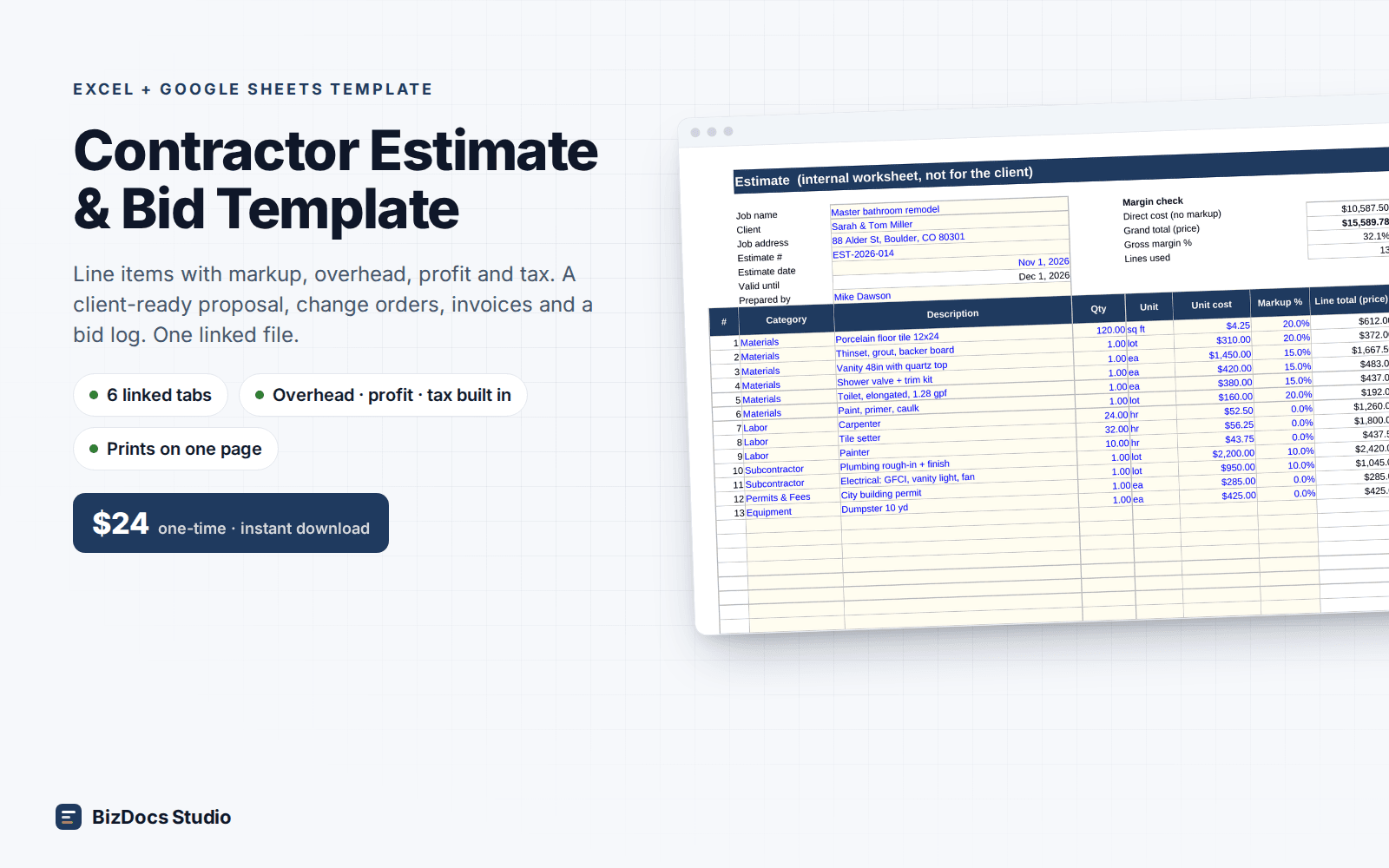
Contractor Estimate & Bid Template
From line items to a signed proposal in one file.
 Excel & Google Sheets
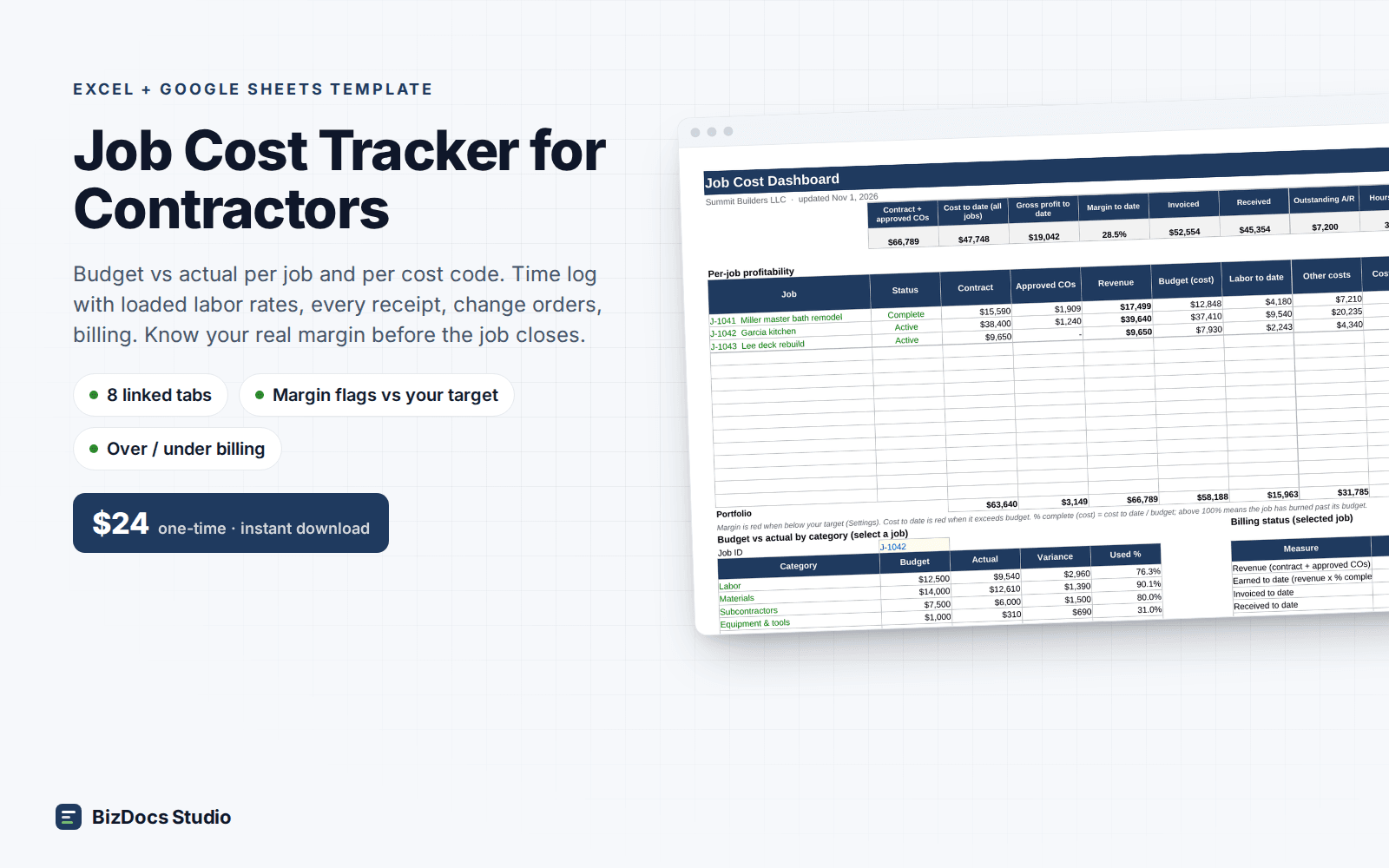
Job Cost Tracker for Contractors
Budget vs actual per job and cost code. See the margin before the job closes.
 Excel & Google Sheets
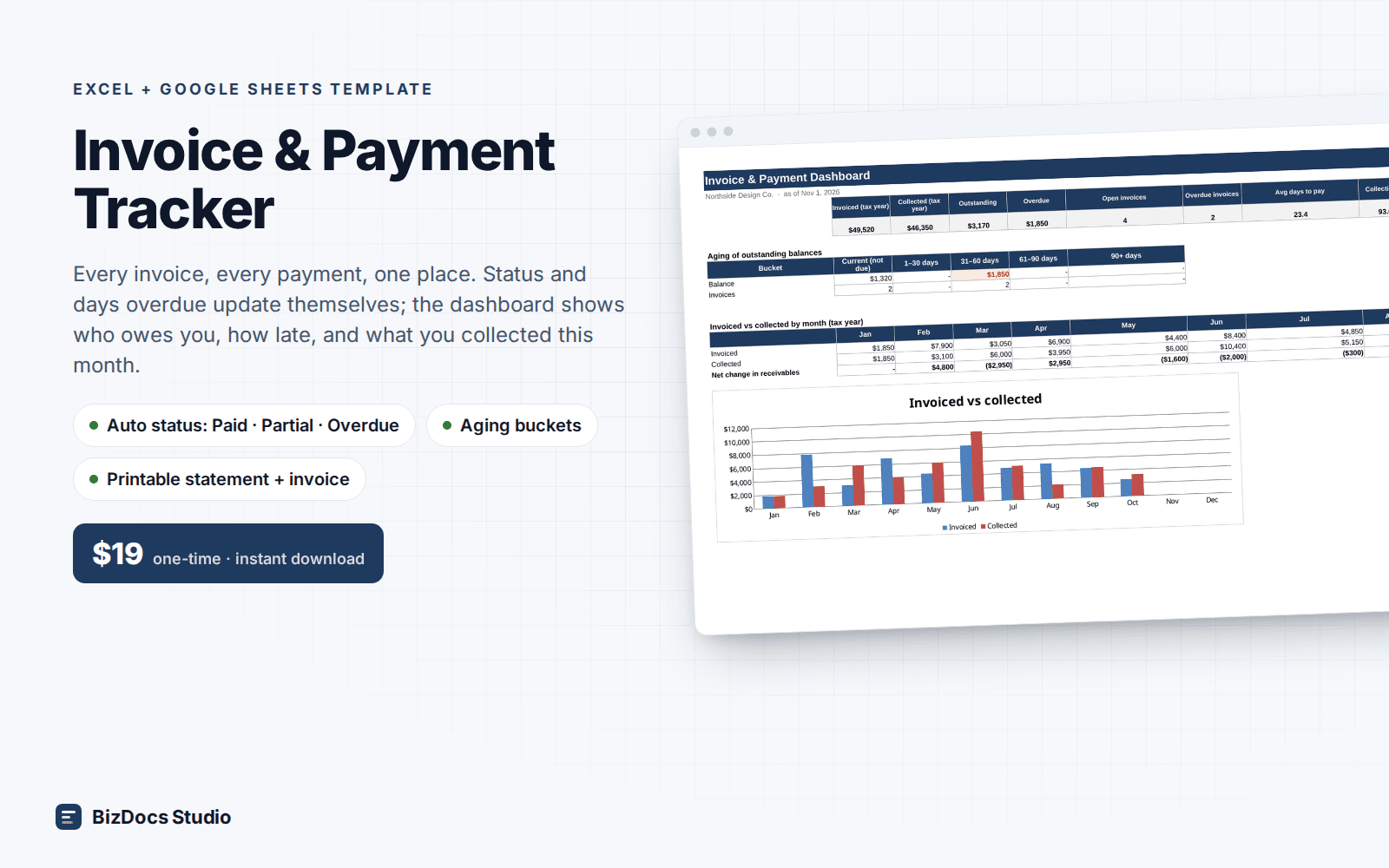
Invoice & Payment Tracker
Every invoice and payment in one place. Know who owes you, and how late.
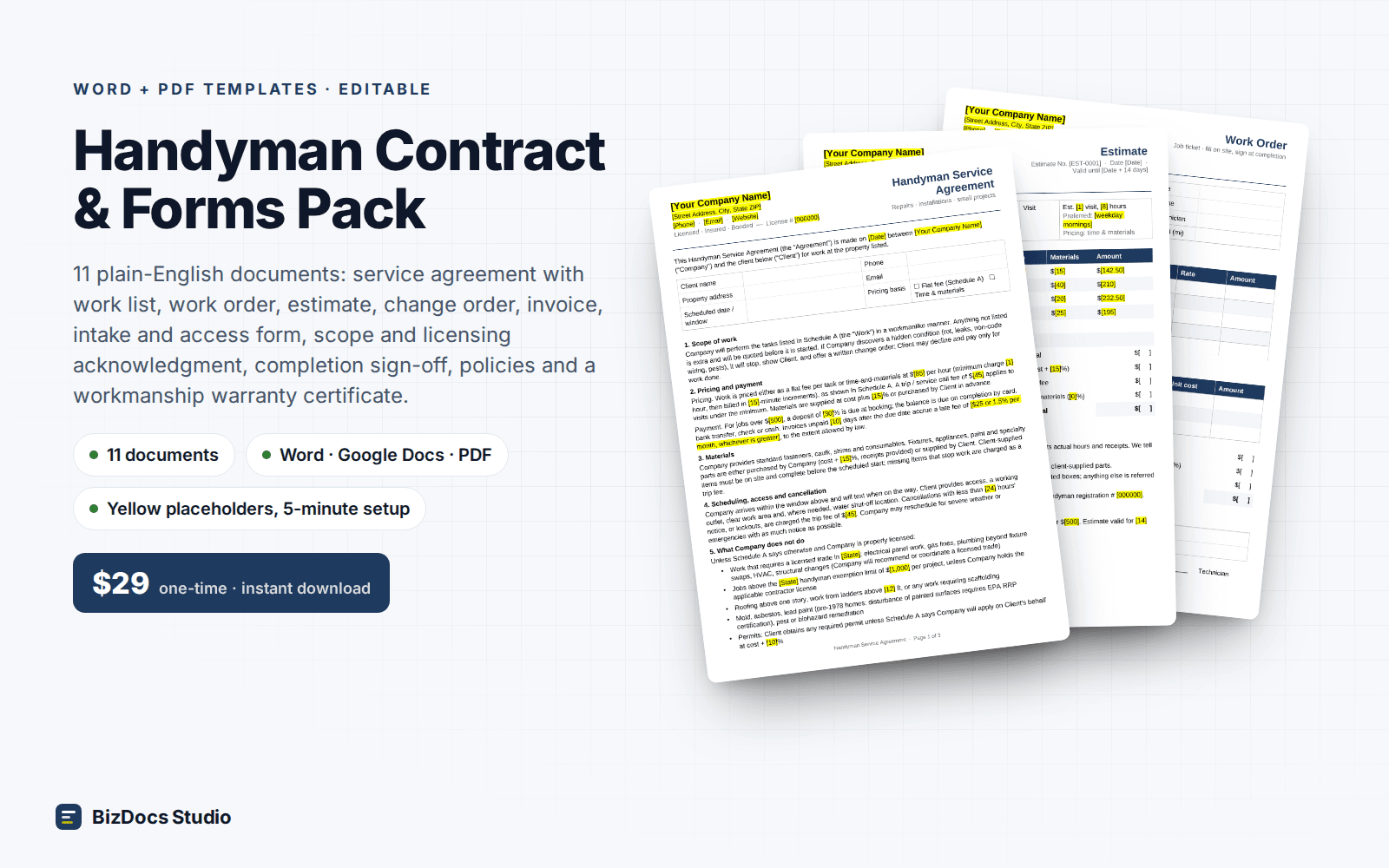 Word & PDF
Handyman Contract & Forms Pack
Eleven documents that keep a handyman business paid, protected and inside the law.
Paperwork checklist: contractors
| Document | Why you need it | Template |
|---|---|---|
| Estimate with overhead and profit | Prices the job from costs, not guesses; the basis for every other document. | Estimate & Bid · $24 |
| Client proposal / bid | What the client signs: scope, price, schedule, payment terms. No internal costs shown. | Estimate & Bid · $24 |
| Change order | Written approval and price for any change in scope before the work is done. | Estimate & Bid · $24 |
| Job cost record | Budget vs actual by cost code so you catch a losing job while it is still running. | Job Cost Tracker · $19 |
| Invoice and payment log | Deposits, progress billing and final invoice with an overdue list. | Invoice Tracker · $14 |
| Lien waiver | Required by many lenders and owners at each payment; state-specific forms. | Not included (state-specific) |
Guides
- How to write a construction estimate (with a template)
How to write a construction estimate step by step: line items, labor burden, overhead, profit, contingency and tax, with a worked example and a ready template.
- Construction proposal template: what to include and what to leave out
What to put in a construction proposal or bid: scope, price, allowances, exclusions, schedule, payment terms and signature. Free outline plus a linked template.
- Change order template: price it, get it signed, then do the work
When to use a change order, what it must include, how to price changes with your markup, and sample wording. Change order form template for contractors.
- Contractor invoice template: deposit, progress and final billing
How to invoice construction work: deposit, progress and final invoices, retainage, change orders and payment terms, with a contractor invoice template.
- Job costing for contractors: a spreadsheet that shows profit while the job runs
How contractors track job costs: cost codes, labor hours at loaded rates, materials, subs, change orders and margin. Job costing spreadsheet template for Excel.
Questions
Which template should a new contractor start with?
The estimate. Every other document is built from it, and pricing from real overhead and profit is the single biggest margin lever. The Contractor Toolkit Bundle adds job costing and invoice tracking for about 30% less than buying each one.
Do these work in Google Sheets?
Yes. The Excel workbooks use standard functions only (no macros), so they import into Google Sheets with formulas intact.
Are the contracts valid in my state?
They are plain-English templates with your state, license number and terms as placeholders. Contractor rules vary by state, so have a local attorney review before use. Not legal advice.